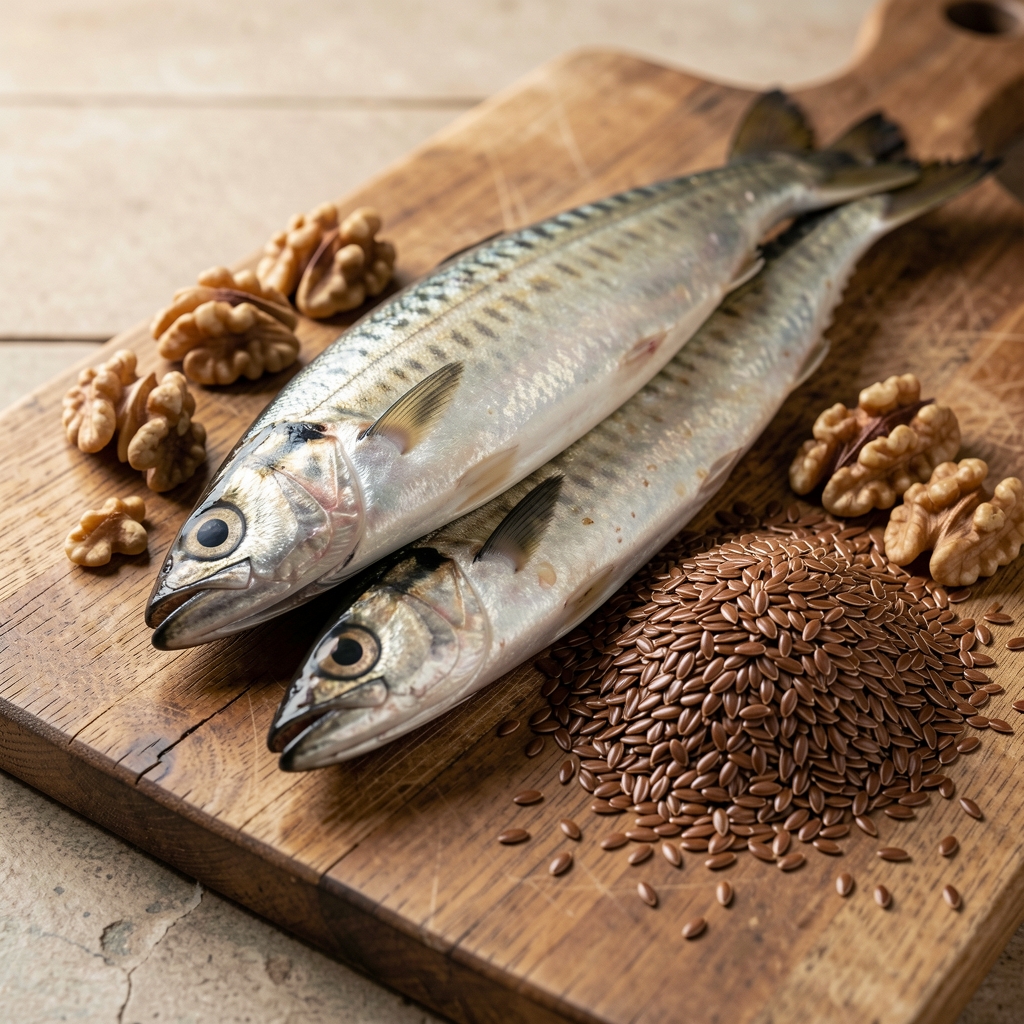

Omega-3 fatty acids are a recurring subject in heart health UK conversations. They occur in several forms, including fats found in oily fish and plant foods, and the research literature is broad rather than simple. This overview explains common terms, food context and questions that can help adults over 40 read nutrition claims carefully. It does not recommend a particular product or routine. The most useful starting point is often a clear account of ordinary eating patterns, preferences, allergies and relevant personal circumstances.
The main forms
EPA and DHA are commonly associated with oily fish, while ALA occurs in foods such as flaxseed, chia and walnuts. The body handles these forms differently, which is one reason that studies should not be treated as interchangeable. Labels and serving sizes also vary considerably.
| Form | Common food context | Reading point |
|---|---|---|
| EPA | Oily fish and some food supplements | Check the amount and study context. |
| DHA | Oily fish and algae-based foods | Do not assume forms have identical roles. |
| ALA | Flaxseed, chia and walnuts | Consider the whole eating pattern. |
Food first, label second
A food pattern offers more context than one isolated nutrient. A plate may include protein, fibre, vegetables and fats together, while a product label usually presents a narrow quantity. Neither description alone explains a person’s whole routine.
Reading the back of a label can clarify serving size, ingredients, storage instructions and the distinction between total oil and named fatty acids. A familiar image on the front is not evidence that two products are equivalent.
How studies differ
Some research follows dietary habits; other work examines measured intake or a specific formulation. Studies may include different ages, durations and outcome measures. A result from one group cannot automatically be carried across to every adult over 40.
- Check who took part and how long the study ran.
- Look at whether intake was measured or recalled.
- Separate an association from a direct causal conclusion.
- Note whether the source describes limits and uncertainty.
Questions for a careful conversation
What does an ordinary week look like?
Write down meals, preferences and practical constraints. The aim is to describe a routine, not to create a perfect record.
What does the label actually contain?
Compare serving size, named forms and additional ingredients. Keep the packaging or a photograph available for reference.
Why might a source not apply?
Differences in age, diet, measurement and study design can make direct comparison difficult.
Editorial note
Nutrition evidence is easier to understand when food context, terminology and uncertainty are considered together rather than reduced to one headline.
Key points
- EPA, DHA and ALA are related but not interchangeable terms.
- Food patterns provide context that a label cannot show by itself.
- Study design affects how broadly a finding can be read.
- Personal questions should be discussed with a qualified healthcare professional.
Further reading
Readers interested in related context can continue with Grenova’s guides to magnesium, exercise and natural changes after 40. These pages use different examples but share the same editorial boundary: general information is not a personal assessment.