
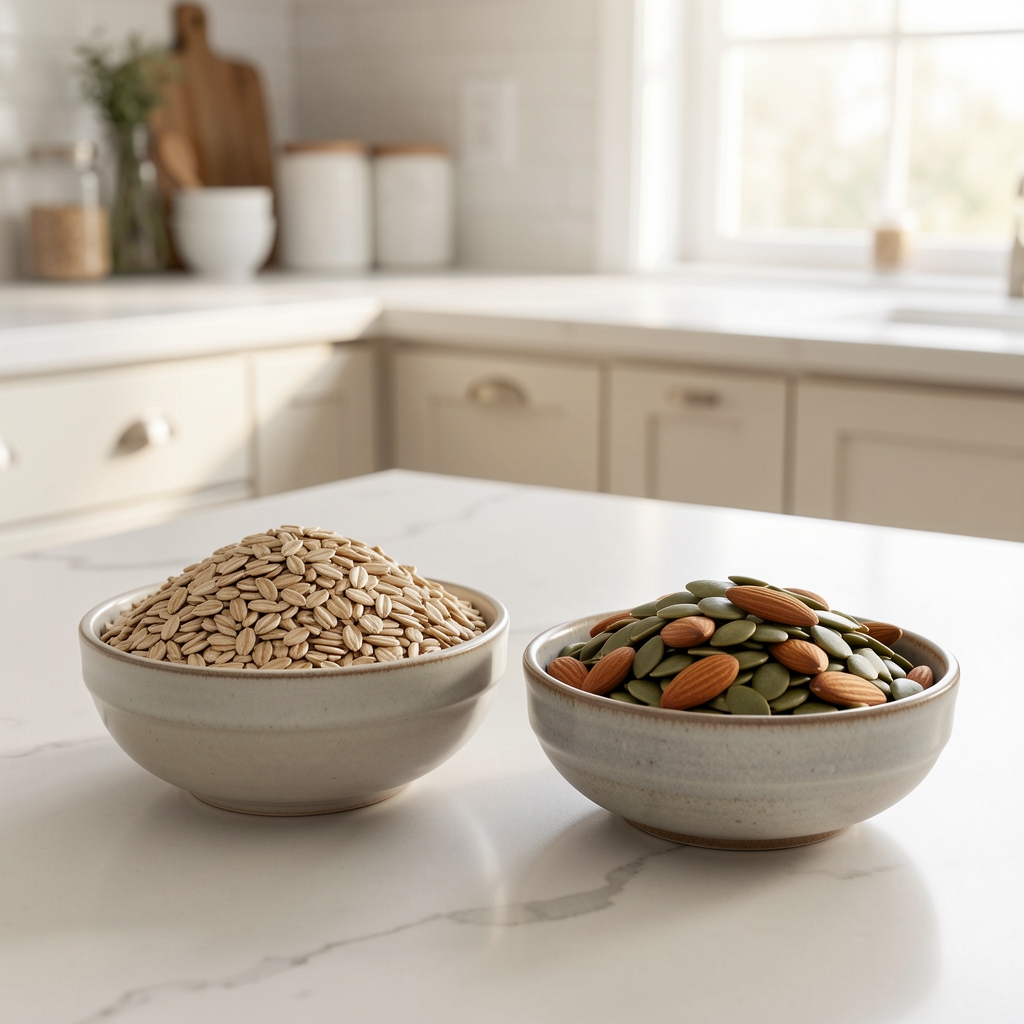
Magnesium is a mineral found in a wide range of foods and is frequently mentioned in discussions of heart rhythm. The subject deserves careful framing because food intake, absorption, individual circumstances and product labels are all different. This editorial overview introduces the mineral’s place in a balanced diet and explains how to evaluate broad statements without turning them into personal advice. Adults over 40 may find it helpful to bring a complete list of foods and products to a GP appointment when discussing their routine.
Food sources
Leafy greens, beans, nuts, seeds and whole grains can contribute magnesium within varied eating patterns. Portion size and preparation influence the overall picture, while a single food rarely defines a person’s intake.
Reading a food pattern
Variety
Different foods contribute different nutrients and textures. A varied plate provides more context than a focus on one ingredient.
Routine
Regular meals and ordinary preferences are more informative than a single unusual day.
Practicality
Cost, preparation, culture and access influence what can be sustained in daily life.
Why labels need attention
Products may list different compounds and quantities. The amount shown on the front is not always the same as the elemental amount used in nutrition tables. Reading the full label and seeking qualified guidance is more useful than relying on a headline.
| Label feature | What to check | Why it helps |
|---|---|---|
| Serving size | Amount described per serving. | Allows a fair comparison. |
| Form | The named compound. | Shows that products are not identical. |
| Additional ingredients | Other listed components. | Provides a fuller picture of the label. |
| Storage | Temperature and handling notes. | Supports practical record keeping. |
Rhythm is a wider subject
Heart rhythm is influenced by many interacting factors. A mineral discussion should not be separated from sleep, hydration, movement, existing routines and personal circumstances. General nutrition information cannot explain an individual experience.
A careful review process
- Start with ordinary food patterns and preferences.
- Read the complete label rather than the front panel alone.
- Record why a product or nutrient has become a question.
- Consider other routines and relevant context.
- Discuss personal decisions with a qualified healthcare professional.
Glossary
- Elemental amount
- The quantity of the mineral itself used in a nutrition description.
- Food source
- An ingredient or food that contributes the nutrient within a meal pattern.
- Context
- The surrounding information needed to interpret a statement responsibly.
Editorial boundary
Magnesium can be discussed as part of food and nutrition literacy, but a general article cannot determine what is suitable for one person.
Key points
- Food variety is more informative than a single ingredient.
- Labels can describe different forms and serving sizes.
- Heart rhythm is a wider subject with many influences.
- Individual questions belong in a conversation with a qualified professional.